What gets paid smoothly, what gets argued, and the paper that wins
Most claims pay without drama; the disputed ones cluster around pre-existing determinations and missing records. Here is how Port Rowan owners keep a claim boring - and the Ontario complaint channel when it is not.
Only about 3.7% of Canadian pets are insured - far below the UK's roughly 25% - which means most Port Rowan owners are self-insuring by default, whether they decided to or not.
Ontario adds 8% retail sales tax directly to insurance premiums - on a $1,176-a-year dog policy that is a real line item Port Rowan buyers should include when comparing quotes.
Port Rowan, Ontario has about 1,102 residents, and pet premiums there are priced by species, breed and age - dogs averaging $1,176 a year nationally - not by the town itself.
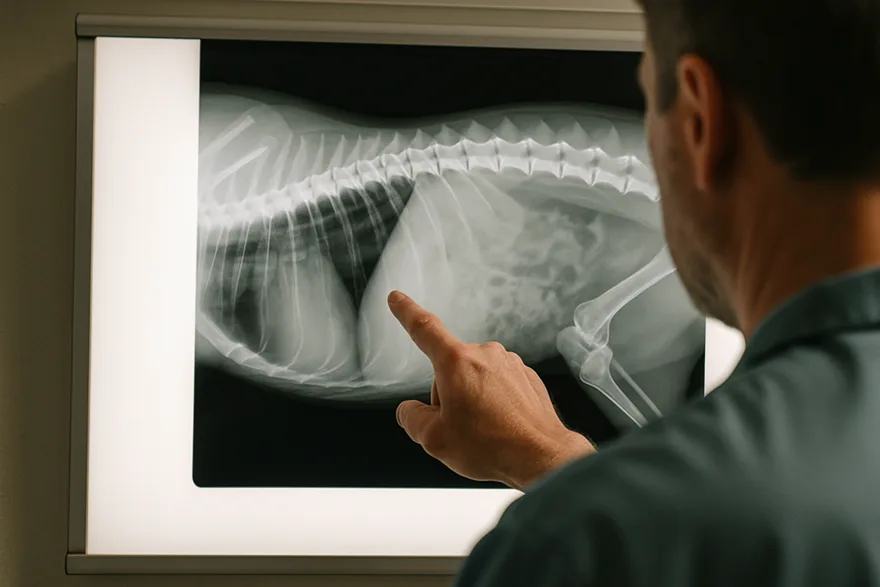
Regulators' consumer guidance names delayed, denied and partially paid claims as the categories to document. Keep every invoice and medical record; the paper trail is the appeal.
Most claims go smoothly; the disputed ones cluster around three things - pre-existing determinations, missing records, and conditions that appeared during waiting periods. All three are preventable at enrollment time, not at claim time.

The Canadian numbers
| Coverage | Canadian average (industry data, CAD) | The catch to price in |
|---|---|---|
| Dog - accident & illness | $1,176/yr (about $98/mo) | Premiums climb with age; breed moves the number more than the town |
| Cat - accident & illness | $601/yr (about $50/mo) | Illness, not accidents, drives most cat claims |
| Typical plan structure | 70/80/90% reimbursement after a $0-$1,000 deductible | The annual cap is the quiet weak link in cheap policies |
| Waiting periods | accidents ~2-15 days; illness ~14 days; some conditions longer | A condition that appears during a wait counts as pre-existing |
| Provincial premium tax | 0-9%% retail tax depending on province | Ontario, Quebec, Saskatchewan and Manitoba add it right on the premium - see below |
Price a claims question both ways before deciding
An honest starting point: a free online quote you can complete in minutes, priced against a direct insurer worth quoting on identical terms. Quotes are free and do not affect your pet's record.
External links go to the providers' own sites and forms. This site may earn a referral fee at no cost to you - it never changes the data above. Premiums shown on this page are Canadian industry averages, not quotes.
Keep the claim boring
Fresh vet exam at enrollment, every invoice kept, conditions dated in writing. If a denial cites a pre-existing condition you dispute, request the medical review in writing and escalate to your provincial regulator - the complaint link is in the provincial-rules section.
What this means in Port Rowan
The most expensive pet insurance is the policy you buy after the diagnosis. Pre-existing conditions are excluded by every insurer in the market - the enrollment date, not the premium, decides what your policy can ever cover.
This page is independent research, not insurance, veterinary or financial advice. Premiums shown are Canadian industry averages in CAD, not quotes; policy terms vary by insurer, pet and province. Verify current rules with your provincial regulator and read any policy's exclusions before buying.
Common questions
What reimbursement level and deductible should I pick?
The common Canadian menu is 70%, 80% or 90% reimbursement after a $0-$1,000 annual deductible, up to caps commonly between $5,000 and $15,000 (one major insurer offers no cap). The honest rule: set the deductible at the biggest bill you could comfortably absorb, and economize on the cap last - a low cap surfaces exactly when the bad year arrives.
Is pet insurance worth it in Canada?
Canadians split honestly: in Angus Reid polling, 22% of insured owners called their coverage a lifesaver, 34% said it helped, and about 10% called it useless. Pet insurance is not an investment; it is protection against the $2,000-$5,600 bad year you could not otherwise absorb. If your savings could take that hit, self-insuring is rational too - only about 3.7% of Canadian pets are insured.
Is pet insurance regulated in Canada?
Yes - as ordinary property-casualty insurance under each province's Insurance Act, overseen by provincial regulators (FSRA in Ontario, the AMF in Quebec, BCFSA in British Columbia and so on). No province has a pet-specific statute. Complaints go to your provincial regulator - the link is on this page's provincial-rules section.
Accident-only or full accident-and-illness coverage?
Accident-only costs a fraction (about $251 a year for the average dog) and covers the broken-leg and swallowed-toy scenarios - but not the far more common illness claims: allergies, infections, cancer. If the full premium fits your budget, accident-and-illness is what the coverage debate is actually about; if not, accident-only still caps your worst single day.
Why did my premium go up even though I never claimed?
Two forces, both structural: your pet aged, and Canadian veterinary costs have been rising roughly 6-8% a year by the profession's own account - about double general inflation. Claims you file are usually not the driver. Ask your insurer for the age-and-cost breakdown of the increase.
Price a claims question both ways before deciding
An honest starting point: a free online quote you can complete in minutes, priced against a direct insurer worth quoting on identical terms. Quotes are free and do not affect your pet's record.
External links go to the providers' own sites and forms. This site may earn a referral fee at no cost to you - it never changes the data above. Premiums shown on this page are Canadian industry averages, not quotes.
Prices in nearby cities
Port Stanley · Powassan · Prescott · Preston Centre · Preston Heights · Prince Edward · Princess-Rosethorn · Queenswood Heights · Quinte West · Rayside-Balfour · Red Lake · Regent Park